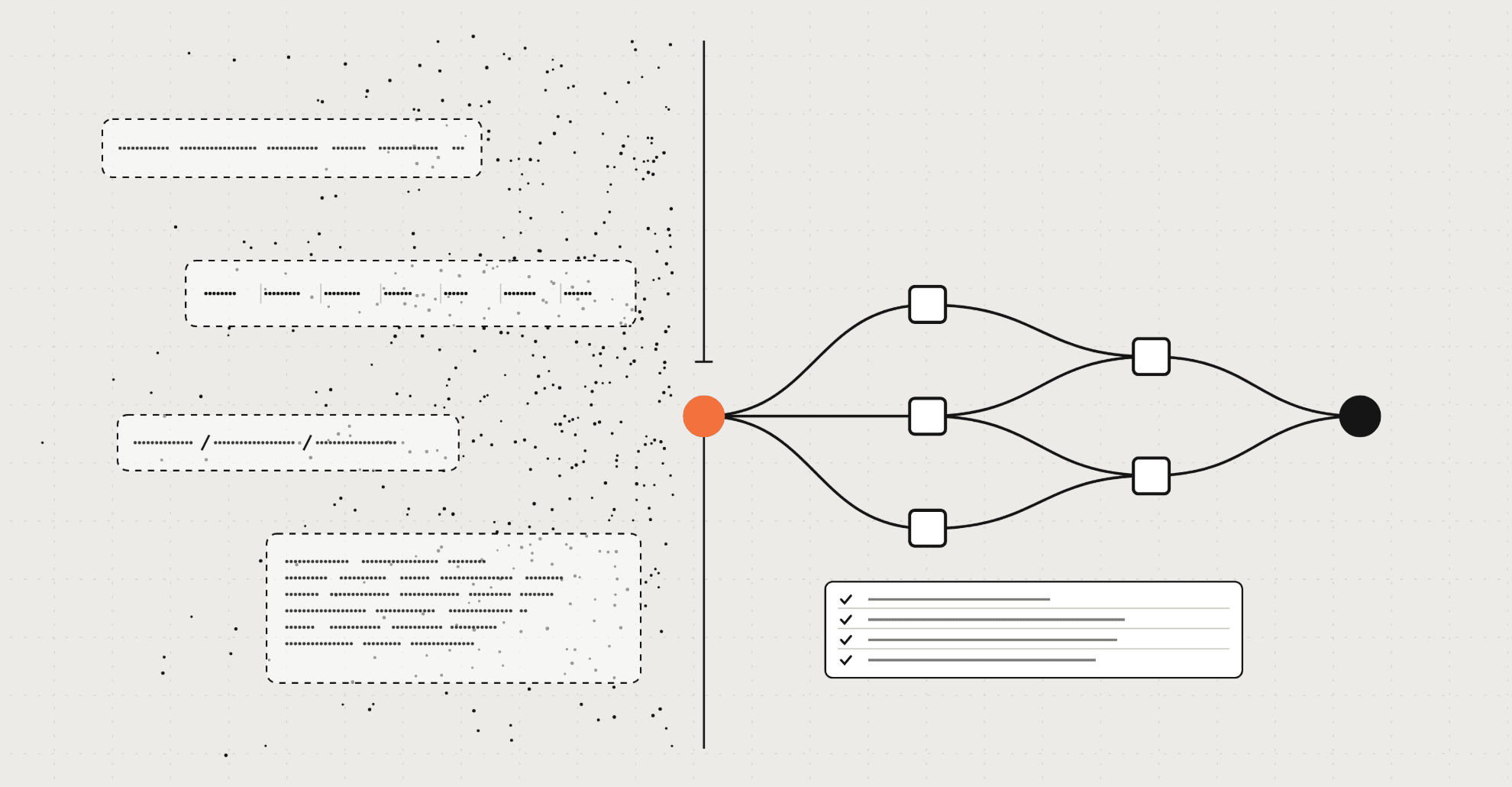
Python Robot Extends Everysk Capabilities
Python’s emergence as a leading programming language is no coincidence. Recognizing its immense potential, we are delighted to announce that Everysk now empowers developers to utilize Python scripts for creating sophisticated automations, enhancing operations across hedge funds, asset management firms, crypto funds, and wealth management companies.
In the global workforce, only one in every 125 professionals knows how to write code. Everysk was formed for the 124 professionals that do not know how to write code – the “citizen developers”. We enable them with a visual interface, where they deploy drag-and-drop digital robots to perform certain tasks. Platforms like Everysk are called no-code, low-code (NC/LC).
With the launch of our new Python Robot, we are letting some code creep in (LC). The Python Robot offers experienced developers the freedom to enhance Everysk’s functionality by injecting localized code into automations. The Python Robot executes this in a seamless and transparent way.
For those with Python coding experience, this new feature expands the potential capabilities within Everysk, and include:
the ability to develop a robot with powerful custom logic, written in Python
opportunities to leverage well-known libraries such as Numpy and Pandas and more advanced machine learning open-source libraries
the production of auditable code for inspection/modifications
the potential for clients with some Python expertise to substantially expand Everysk’s library of Robots.
the capabilities for developers to explicitly write code for very technical/custom portions of the automation, while other non-technical aspects of a workflow (data ingestion, exploration, distribution) are taken care of by no-code parts of the automation.
We, at Everysk, are big believers in a hybrid approach as described in item 5 above, i.e. to leave most of the “plumbing” to be taken care of by efficient no-code robots but also provide the ability for developers to quickly utilize our own platform entities (datastores, portfolios, files, etc), to cast them into Python and then leverage the power of a widespread language.
Python Inside Everysk: An Example Use Case
Those familiar with Everysk understand that a workflow consists of one or more Digital Robots. Each Robot completes one task and clients string them together according to their unique requirements.
The following example shows how to deploy Python code within Everysk.
Retrieve the ID of a Datastore using the Datastore Retriever robot. Then pass this ID to the interface of a Python Robot. This Python Robot below was renamed “fair_allocation” and it computes metrics for fair allocation given a user-supplied datastore of trades from a single trader into various portfolios:
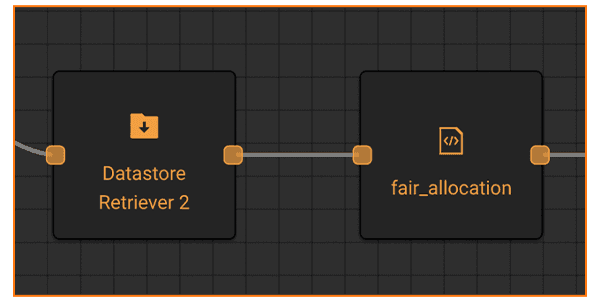
Set the interface in the fair_allocation robot:
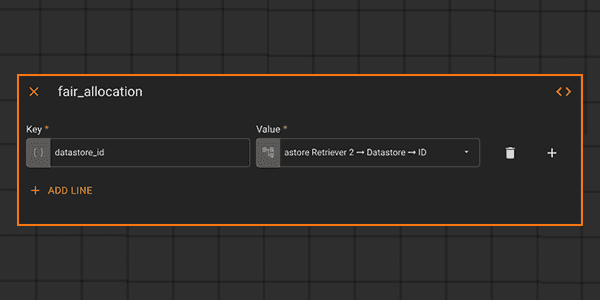
Associate the ID of the previous robot (Value) with the key “datastore_id”. Inside the fair_allocation code, the ID is now available for the code to use:
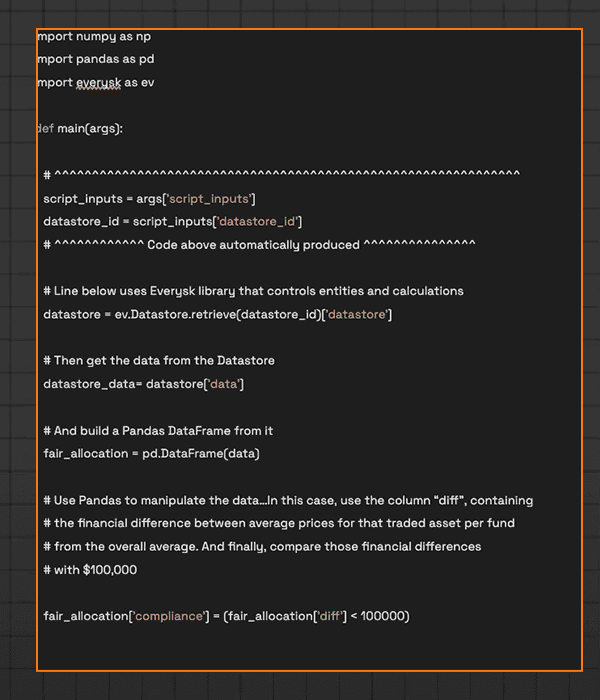
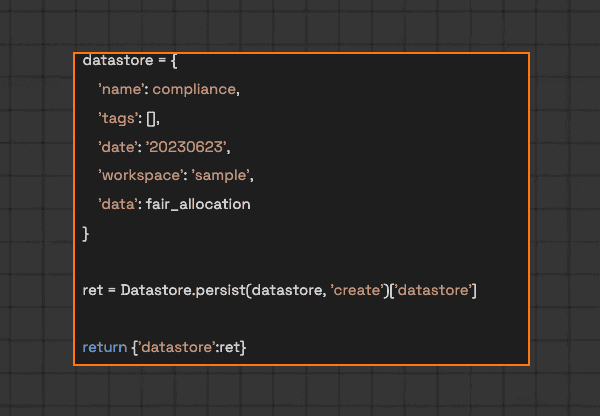
If desired, propagate the changes back to the automation by instantiating a new Everysk datastore with the extra “compliance” column:
With the Python Robot, clients can extend the native library to cater to their needs. The following examples show how capital markets companies are using this new feature to extend the capabilities of the platform.
Dynamic Hedging Workflow
This automation allows users to upload lists of options to be dynamically delta hedged in multiple batches.
The system controls complex structured options (collars, straddles, etc) and produces net hedge amounts. Underlying prices are checked using a real time price engine every 15 minutes and if the stock has moved some predetermined threshold amount, the new delta is calculated and staged at an OMS of choice. We are currently using Enfusion for this workflow. At the end of the day, a comprehensive PL report is generated.
The fully customizable report calculates the PL from the options, from the hedges and other statistics for the dynamic hedging program.
The dynamic hedging logic is all implemented using Everysk’s Python Robot.
Financing Optimization Workflow
This automation allows information about financed equity positions to be crossed with arriving broker axes in real time. In case there is a broker that has an axe to finance a stock less expensively than the current financing terms, a switch trade is surfaced and staged at an OMS of choice.
The logic is implemented as a doubly sorted ordered stack (similar to a limit order book), where positions are recursively checked against axes until no additional switch trades are available.
All the logic is efficiently implemented with a Python robot. A comprehensive report is created with all the switch trades and cumulative savings. All switch trades can be reviewed and approved directly in your distribution channel of choice (email, Teams, Slack, Zoom)
Internal Trade Crossing Workflow
This automation allows multi-desk operations to internally cross fixed income trades before they are sent to market for execution. It uses similar code from the equity finance optimization use case, where a sorted ordered stack represents purchases and sales of the same bond, by different desks.
Loan Waterfall Modeling Workflow
This automation allows a waterfall logic to be efficiently implemented, given a list of underlying loans. It calculates the tranche cash flows for a pass-through MBS using a simple prepayment speed model and constant default rate. It calculates the coupons and average lives for senior and subordinated tranches.
Python Robot: The Final Word
Since the release of the Python Robot, we have successfully worked with clients to implement workflows that were not initially envisioned to be created using our standard library of robots. Everysk gives clients the power to utilize the Python Robot themselves, but can also work with clients to develop customized code on their behalf. By using a powerful Python Robot, we have been able to extend the usability of our technology, beyond more traditional use cases.