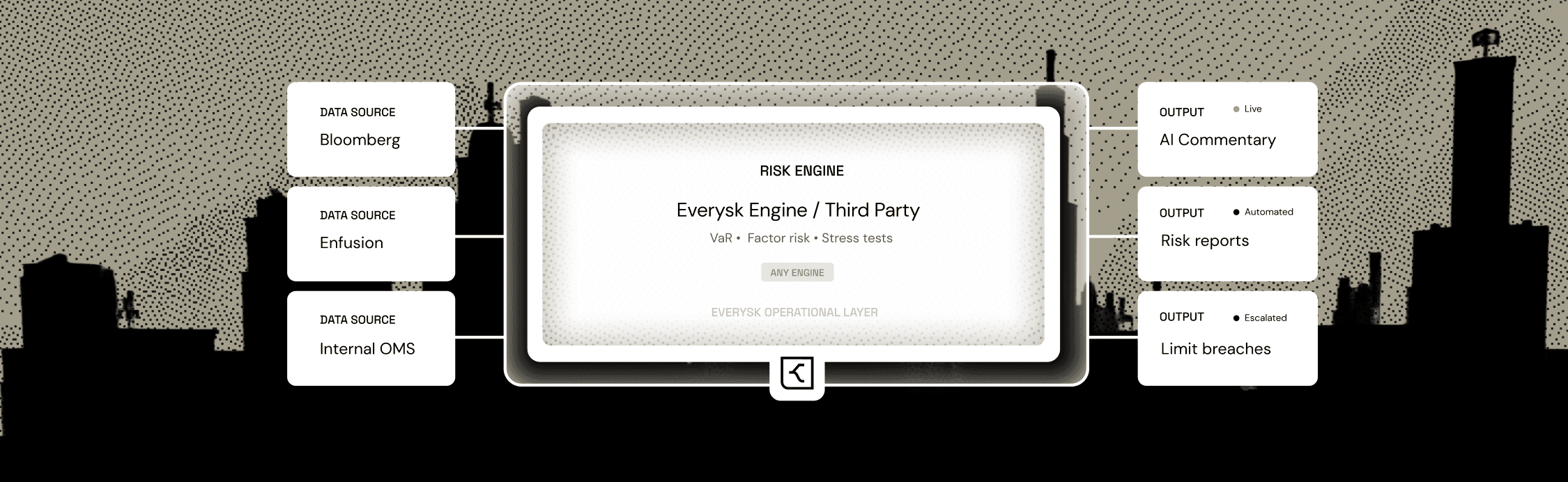
The complete operational layer around risk.
Connect portfolios and trades from everywhere
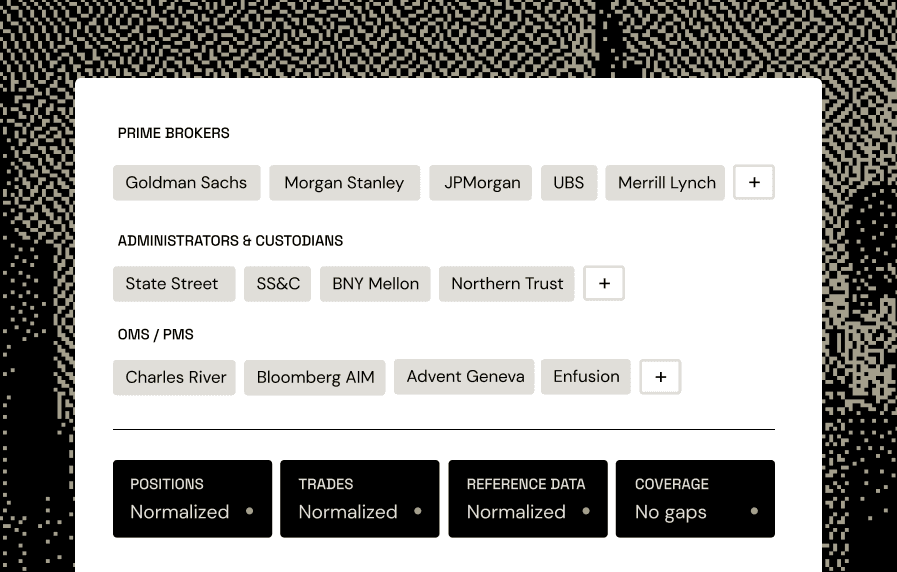
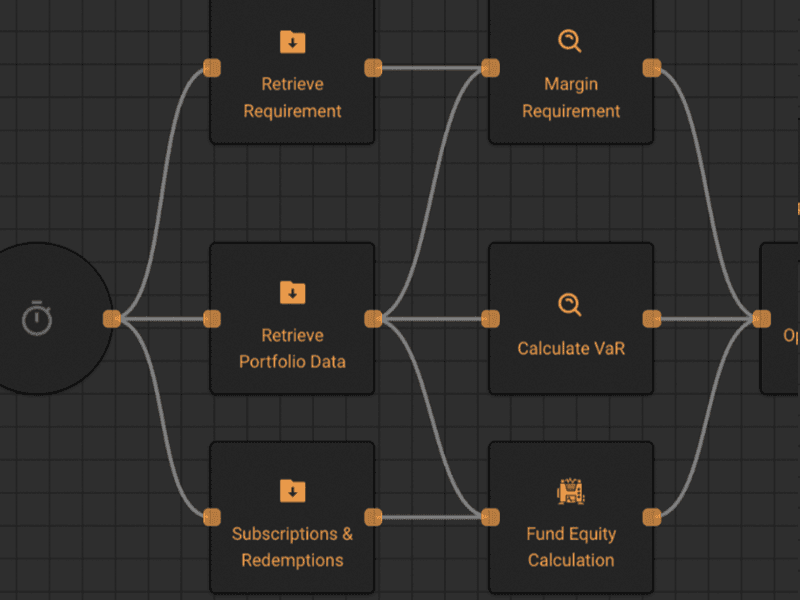
Everysk connects to every source your portfolio and trade data lives in: prime brokers, administrators, custodians, OMS and PMS platforms, and market data providers. Positions, trades, and reference data are normalized into one consistent dataset, so risk runs on complete inputs instead of fragmented exports and manual reconciliation.
Pre-built integrations cover the systems institutional firms use most, and if you run something we don't yet support, our team builds the connection as part of implementation. The result is full coverage with no blind spots in your risk picture.
Powerful engines, or bring your own
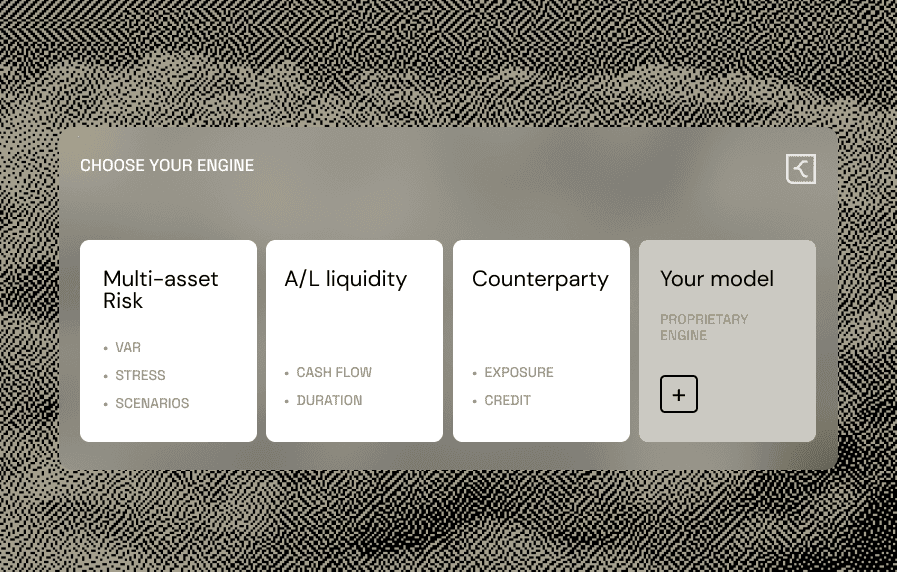
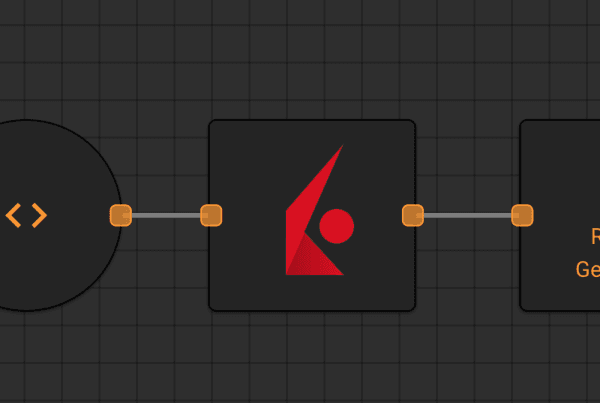
Everysk ships with three institutional-grade engines out-of-the-box: a sophisticated multi-asset risk engine covering VaR, stress testing, and scenario analysis; an asset-liability liquidity engine for cash flow and duration matching; and a counterparty risk engine for exposure aggregation and credit analysis.
Already invested in your own engines? Everysk is fully agnostic. Plug in your proprietary models and still benefit from the pre- and post-processing workflows that make the output operational.
Turn risk into a stateful, monitored process
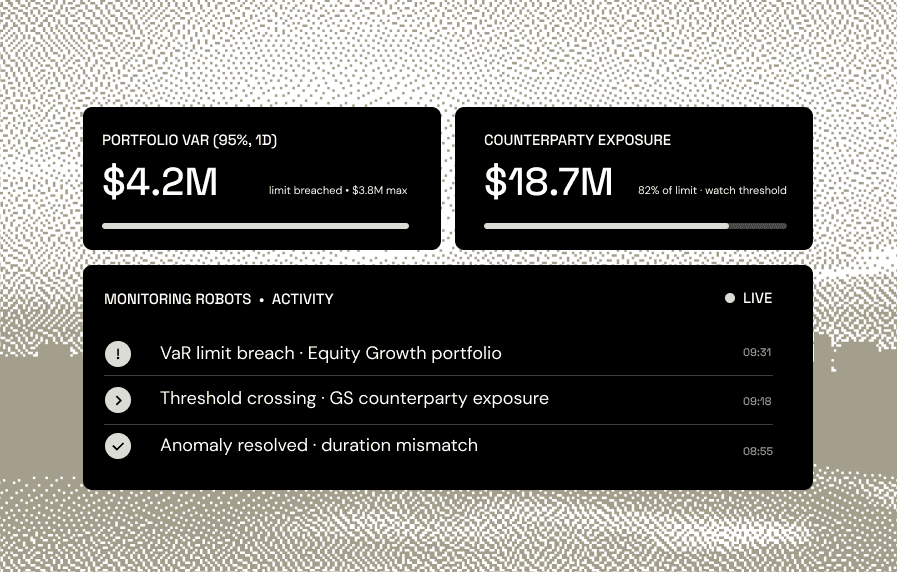
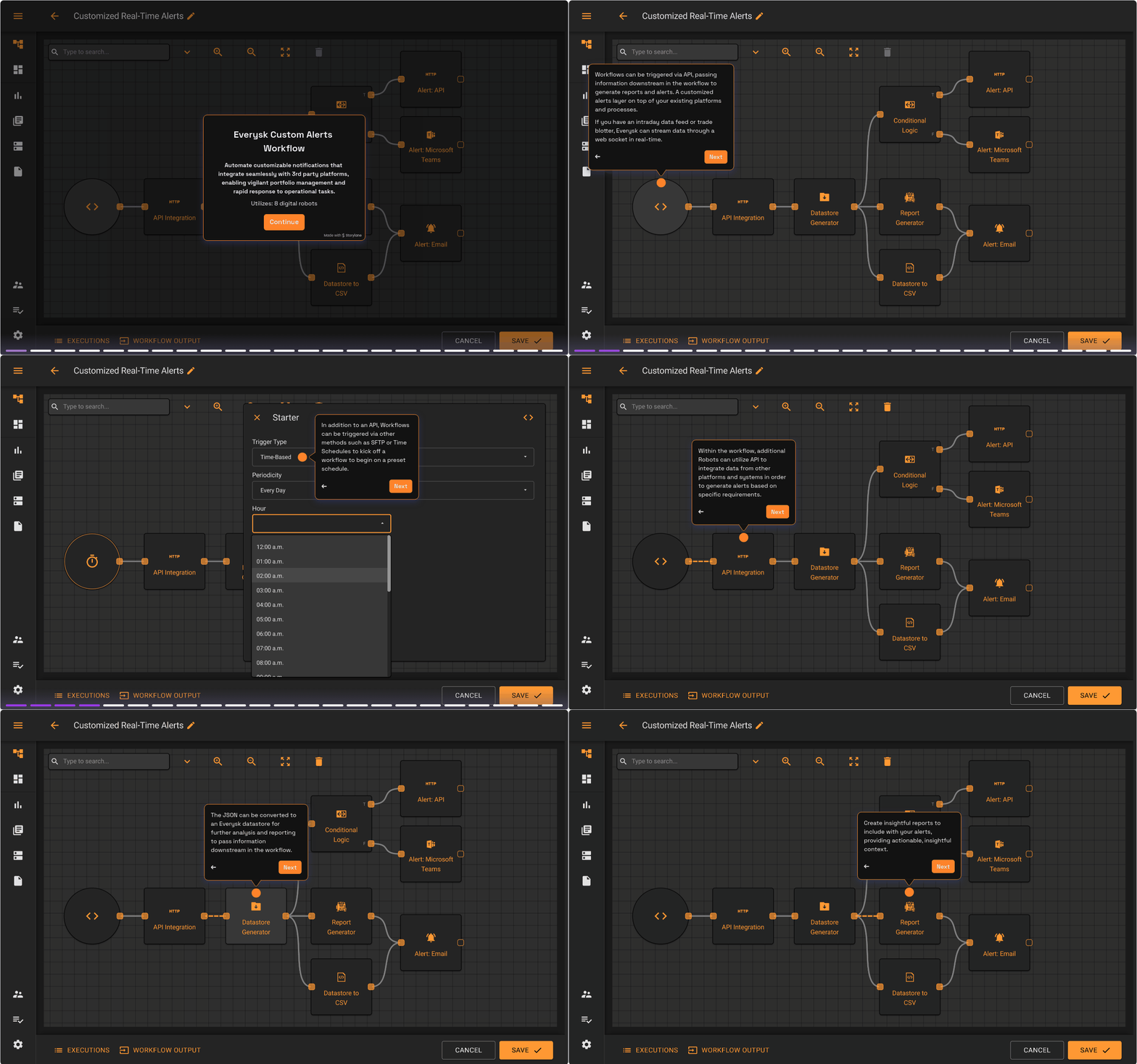
Everysk transforms risk output from static reports into a continuously monitored, stateful process. Deterministic and agentic robots watch for limit breaches, threshold crossings, and anomalies in real time, ensuring nothing slips through.
Risk data can be dissected, sliced, and explored with Everysk's built-in business intelligence tools, giving analysts the depth they need without exporting to external platforms.
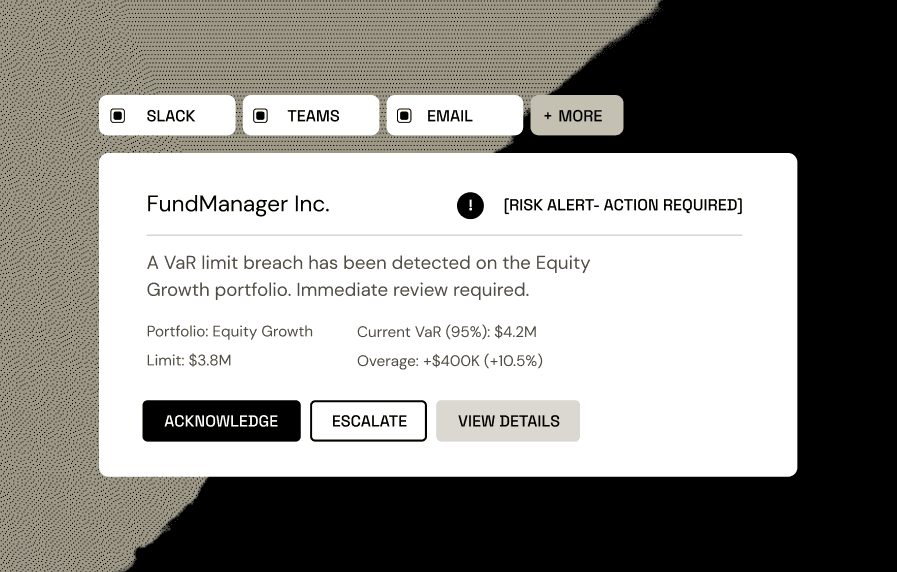
Distribute to the channels your team already uses
Alerts and reports are delivered directly to your existing channels: Slack, Microsoft Teams, email, and more. Every notification is contextual, including the relevant risk data and what triggered it.
Actionable buttons can be embedded directly in the distribution, allowing reviewers to acknowledge, escalate, or trigger remediation workflows without leaving their communication tool.

Related Use Cases
Frequently asked questions
Do I have to use Everysk's risk engines?
No. Everysk is fully engine-agnostic. You can use our multi-asset risk, liquidity, and counterparty engines, plug in your own proprietary models, or run both side by side. The operational layer works regardless of which engine produces the numbers.
What systems does Everysk integrate with?
Everysk has 100+ pre-built integrations with brokers, administrators, custodians, OMS/PMS platforms, and market data providers. If you use a system we do not yet support, our team builds the integration for you as part of the implementation.
How does Everysk make risk "stateful"?
Traditional risk platforms produce static snapshots. Everysk maintains a continuous, auditable state for every risk metric, limit, and threshold. Deterministic and agentic robots monitor this state in real time, triggering workflows when conditions change rather than waiting for the next report cycle.
Can alerts include actionable buttons?
Yes. Alerts distributed to Slack, Teams, or email can include embedded action buttons. Reviewers can acknowledge, escalate, request more detail, or trigger remediation workflows directly from the notification, without switching to another tool.
What does the Qualitative Commentator do?
The Qualitative Commentator is an agentic AI that reviews portfolio changes and generates plain-language commentary. It explains what changed, quantifies the impact, and highlights what to watch, producing output that is ready for inclusion in client letters or internal risk reviews.